
Our School Expectations
Ready, Respectful, Safe
At New Pastures Primary School, we want every child to feel safe, valued and ready to learn. Positive relationships and clear, consistent expectations help us create a calm, welcoming environment where everyone can succeed.
Our three expectations are Ready, Respectful, Safe. We teach children what these mean, model them throughout the school day and recognise pupils when they put them into practice.
They support our school values of Community, Pride and Aspirations, helping children care for others, take responsibility and feel proud of their contribution.
Ready
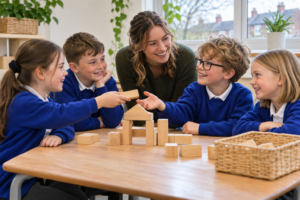
We are prepared to learn and take part.
Being ready means:
- Arriving on time and settling into our routines.
- Listening when someone is speaking.
- Having the equipment we need and looking after it.
- Joining in, trying our best and asking for help.
- Allowing others to learn without interruption.
We recognise that children sometimes need support to become ready for learning. Adults help pupils understand routines, manage their feelings and take their next step.
Respectful
We treat people, belongings and our environment with care.
Being respectful means:
- Speaking kindly and listening to others.
- Valuing differences and including people.
- Taking turns and working cooperatively.
- Caring for our classrooms, resources and school grounds.
- Recognising how our words and actions affect others.
- Taking responsibility and helping to put things right.
Adults model respectful relationships and help children practise these skills in everyday situations.
Safe
We make choices that help keep ourselves and others safe.
Being safe means:
- Using kind words and safe actions.
- Moving sensibly around school.
- Using equipment carefully and following instructions.
- Staying in the places where we should be.
- Using technology safely.
- Telling a trusted adult if something worries us or someone needs help.
We teach children that asking for help is a positive choice. Everyone has the right to feel safe, and adults will listen and respond to concerns.
Teaching and Recognising Positive Behaviour
We teach behaviour as part of children’s learning. Staff explain expectations clearly, demonstrate them and provide opportunities to practise.
We notice and recognise positive choices, effort, kindness and improvement. This helps children understand what they have done well and encourages them to build positive habits.
Our expectations apply throughout the school day, including lessons, playtimes, lunchtimes, clubs and educational visits.
When Children Need Support
When a child finds it difficult to meet an expectation, adults respond calmly and consistently. We remind children of what is expected, help them understand their choices and support them to return to learning.
Our staged approach includes:
- Reminder — a clear reminder of the expectation.
- Warning — an opportunity to change behaviour, supported by a brief restorative conversation.
- Stop, Think, Reset — time and support to reflect, regulate and prepare to rejoin learning.
- Recorded follow-up — continued concerns are recorded, with further action and support agreed as appropriate.
Serious incidents may require an immediate response in line with our Behaviour and Relationships Policy.
Restorative conversations help children understand what happened, who was affected and what they can do to put things right. We support pupils to repair relationships and make a more positive choice next time.
An Inclusive Approach
Our expectations are shared by everyone, and we recognise that children may need different support to meet them.
For some pupils, this may include visual reminders, additional adult support, help with communication, sensory regulation or an individual support plan. We take account of children’s needs while maintaining clear expectations and keeping everyone safe.
Working with Families
We work with parents and carers to understand children’s needs, celebrate progress and address concerns. Sharing information helps us provide consistent support and agree useful next steps.
If you have a concern about your child’s behaviour, friendships or wellbeing, please speak to their class teacher or contact the school office.
What is the best thing you have done in school?
“Everything. I enjoy every single second of school.”
What is your favourite subject and why?
“Topic and Art are my favourite lessons because they push me to my limits and are fun.”
What do you like about the teachers?
“They tell jokes and help us learn.”
What would you say to a child who is worried about joining this school?
“Be yourself. It’s a great school and you’ll fit in.”
What is the best thing you have done in school?
“I enjoy the school trips to the museum so I can learn.”
What is your favourite subject and why?
“English because I love writing stories and poems.”
What do you like about the teachers?
“They make me feel safe.”
What is the best thing you have done in school?
“I really enjoy playing for the school football team.”
What would you say to a child who is worried about joining this school?
“We will look after you and help you.”
What do you like about the teachers?
“They are helpful and kind.”
What is your favourite subject and why?
“Art because I like drawing and sometimes my work goes on the wall.”
What is your favourite subject and why? –
“I love P.E. because I am a real sports person and enjoy being creative.”
What is your favourite subject and why?
“Art because it calms me down and it’s great fun.”
What is the best thing you have done in school?
“The best thing I’ve done at school was going to William’s Den and building my own den.”
What is the best thing you have done in school?
“I love the school trips and when we go to the church to sing.”
What is your favourite subject and why? –
“Maths because I love numbers and adding.”