
Relationship, Sex and Health Education
At New Pastures Primary School, Relationships, Sex and Health Education (RSHE) helps children build positive relationships, understand their changing bodies and make informed choices about their health and wellbeing.
We want every child to feel valued, understand personal boundaries and know how to seek help. Our teaching is age-appropriate, inclusive and sensitive to children’s needs and experiences.
RSHE is taught through our Kapow Primary PSHE curriculum, alongside relevant learning in science and computing. It supports our values of Community, Pride and Aspirations and our expectations of Ready, Respectful, Safe.
Relationships Education
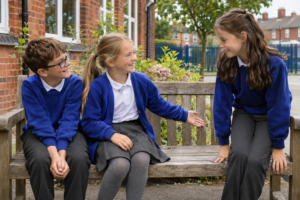
Children learn about the relationships that matter in their lives, including families, friendships and relationships with trusted adults.
Learning includes:
- Recognising caring, supportive relationships.
- Understanding that families can look different and that all children deserve care and respect.
- Developing friendships, managing disagreements and recognising bullying.
- Respecting personal space and boundaries.
- Understanding privacy and recognising inappropriate or unsafe behaviour.
- Staying safe in online relationships.
- Knowing when and how to ask a trusted adult for help.
We help children understand that they should speak to a trusted adult if something makes them feel worried, uncomfortable or unsafe.
Health Education
Children develop an understanding of how to care for their physical and emotional wellbeing.
Learning includes:
- Recognising and talking about feelings.
- Developing strategies to manage emotions and seek support.
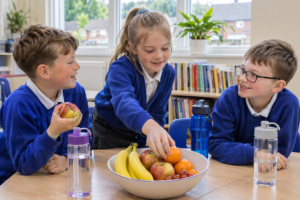
- Understanding the importance of sleep, physical activity, healthy eating and hygiene.
- Making safe choices, including when using technology.
- Learning about growing and changing, including puberty, at an appropriate stage.
- Developing independence in looking after themselves.
Health Education
Children develop an understanding of how to care for their physical and emotional wellbeing.
Learning includes:
- Recognising and talking about feelings.
- Developing strategies to manage emotions and seek support.
- Understanding the importance of sleep, physical activity, healthy eating and hygiene.
- Making safe choices, including when using technology.
- Learning about growing and changing, including puberty, at an appropriate stage.
- Developing independence in looking after themselves.
Sex Education
Our approach to sex education is set out in the school’s Relationships, Sex and Health Education Policy and curriculum information.
Teaching builds on children’s understanding of growing, changing and reproduction within science. Any additional sex education is carefully planned, age-appropriate and explained to parents and carers so that families understand what will be taught.
How We Teach RSHE
We use Kapow to provide a planned sequence of learning that develops children’s knowledge and understanding over time. Teachers take account of prior learning and our mixed-age classes when planning lessons.
Stories, discussion, practical activities and carefully chosen scenarios help children explore ideas and practise making informed decisions.
Teachers establish clear expectations for respectful discussion. Children can ask questions without being expected to share personal experiences. Questions are answered sensitively and appropriately, taking account of pupils’ age, understanding and the planned curriculum.
In Nursery and Reception, the foundations are developed through personal, social and emotional development, everyday routines, play, stories and supportive relationships with adults.
Inclusion and Adaptations
We want all pupils, including children with special educational needs and disabilities, to access learning that helps them understand relationships, wellbeing and personal safety.
Teachers adapt lessons through approaches such as:
- Clear language, visual prompts and practical examples.
- Breaking learning into smaller steps.
- Repeating and revisiting important messages.
- Providing additional processing time and different ways to communicate.
- Using adult support and familiar scenarios to strengthen understanding.
Teaching takes account of pupils’ individual needs, experiences and understanding while maintaining ambition for every child.
Working with Parents and Carers
Parents and carers play an important role in helping children understand relationships, health and growing up. We value open communication and encourage families to discuss questions or concerns with us.
Our policy and curriculum information explain our approach. Parents and carers can contact school to discuss lesson content and view the teaching materials used.
We consult families when developing or reviewing our RSHE policy and consider their views alongside pupils’ needs and the school’s responsibilities.
Parents’ Right to Withdraw
Relationships Education and Health Education are compulsory, and parents cannot withdraw their children from these subjects. This includes teaching about puberty within Health Education.
Parents can request that their child is withdrawn from sex education that is additional to the National Curriculum for science. This right does not apply to the required science content.
If you wish to discuss withdrawal, please contact Mr Wray, Principal, through the school office. We will explain the content concerned, listen to your views and discuss the arrangements.
Safeguarding and Support
RSHE helps children recognise when something is wrong and understand how to seek help. Any concern raised during a lesson is followed up in line with our safeguarding procedures.
If you have a concern about your child’s safety, relationships or wellbeing, please speak to their class teacher or a member of our safeguarding team.
What is the best thing you have done in school?
“Everything. I enjoy every single second of school.”
What is your favourite subject and why? –
“Maths because I love numbers and adding.”
What is your favourite subject and why?
“Art because I like drawing and sometimes my work goes on the wall.”
What is the best thing you have done in school?
“I enjoy the school trips to the museum so I can learn.”
What is your favourite subject and why? –
“I love P.E. because I am a real sports person and enjoy being creative.”
What do you like about the teachers?
“They tell jokes and help us learn.”
What is the best thing you have done in school?
“I love the school trips and when we go to the church to sing.”
What would you say to a child who is worried about joining this school?
“Be yourself. It’s a great school and you’ll fit in.”
What is the best thing you have done in school?
“The best thing I’ve done at school was going to William’s Den and building my own den.”
What do you like about the teachers?
“They are helpful and kind.”
What do you like about the teachers?
“They make me feel safe.”
What is your favourite subject and why?
“English because I love writing stories and poems.”
What is your favourite subject and why?
“Art because it calms me down and it’s great fun.”
What would you say to a child who is worried about joining this school?
“We will look after you and help you.”
What is the best thing you have done in school?
“I really enjoy playing for the school football team.”
What is your favourite subject and why?
“Topic and Art are my favourite lessons because they push me to my limits and are fun.”